

Those who always wanted to tell people they studied at Stanford but lacked the grades or money to apply are in luck, because professors there have made some classes available online for free. Anyone can watch lectures and view class materials, submit assignments and receive feedback. Those who make the grade can receive “statements of accomplishments” from the instructor. [More]
stanford
Stanford U Investigates A Dozen Docs For Taking Pharma Payola
By 12.21.10
Twelve doctors at Stanford University Medical School are under investigation by the school’s disciplinary board after their names cropped up in a database of docs getting paid big bucks by pharmaceutical companies for speaking gigs, a violation of school policy. [More]

100 Kilos Of Gold Art Show Cancelled
By 3.6.09
100 kilos of gold bricks will not be arriving at the Gagosian Gallery in Santa Monica, California this weekend. The bricks were to have been the centerpiece of a show called One Ton One Kilo by artist Chris Burden. The gold was bought from Stanford Coins and Bullion, part of the Stanford Financial group. You know, Stanford, the mini-Madoff guy accused of bilking investors in an $8-billion ponzi scheme. Now the transfer is frozen while the SEC investigates Stanford. It appears that large-scale conceptual sculpture is but the latest unexpected casualty of the economic crisis.
By 2.19.09
../..//2009/02/19/more-information-about-the-stanford/
More information about the Stanford International Bank fraud case, including, but not limited to: a bank panic in Venezuela, hugs from Nancy Pelosi, allegations of money laundering for drug cartels, and predictable vows to “fight with every breath to continue to uphold our good name and continue the legacy we have built together.” Still no word on where the $8 billion went. [Forbes]
SEC Charges Texas Businessman With $8 Billion Fraud
By 2.17.09
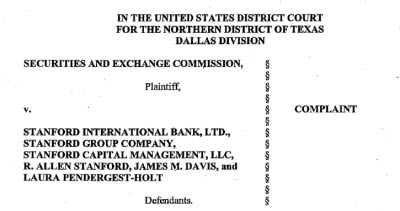
The SEC has charged Robert Allen Stanford, a prominent Texas businessman, in connection with an $8 billion fraud in the sale of so-called certificates of deposit that promised unrealistic rates of return. Stanford guaranteed fixed-income investments by “promising improbable and unsubstantiated high interest rates,” according to a statement by the SEC.
No More Drug Company Pens For Stanford Doctors
By 9.14.06
In order to combat the perception of undue corporate influence upon doctors, Stanford University is banning its hospitals from receiving all gifts from drug company reps. Effective October 1st, everything from pens to coffee cups to catered lunches are verboten.
Stanford Studies Show Getting Ripped-Off is Healthy
By 2.10.06
Companies charge us more out of the kindness of their hearts, new Stanford Graduate School of Business (SGSB) study shows.
In each of three different studies, participants were given energy drinks that supposedly make consumers feel more alert and energetic. Some participants paid full price for the drinks; others were offered them at discounted prices. The participants were then asked to solve a series of word puzzles. In all three studies, the people who paid discounted prices consistently solved fewer puzzles than the people who paid full price for the drinks.

