


The Federal Trade Commission is one of the agencies consumers are supposed to turn to when they’ve been defrauded by scam phone calls, so it — sadly — makes sense that some fraudsters have decided that the best way to con victims is to pretend they are calling from the FTC’s Consumer Response Center. [More]
spoofing

Why Won’t Macy’s Tell Me If Password Reset Email Is Legit Or Not?
By 6.6.17
Someone (either Macy’s or perhaps a mysterious third-party) is confusing shoppers by blasting out emails telling them to either change their Macy’s passwords… or just ignore the email altogether because maybe they don’t have an account and shouldn’t be worried. [More]
FCC Wants To Fine Pair Of Idiots $25K Each For Faking Caller ID Of Prison, School To Harass Ex-Wife
By 8.2.16
Spoofing — the practice of sending out fake caller ID information to disguise the caller’s real identity — is legal, so long as it’s not done to deceive or harm anyone. Reporters, victims of domestic abuse, human rights organizations, all legally use spoofing to protect their locations or sources. This sort of trickery is definitely not allowed when it’s deployed just to make harassing phone calls to your ex. [More]
Should Caller ID Spoofer Be Held Liable For Users Who Make Harassing Calls?
By 5.4.16
Spoofing phone numbers — the practice of making it appear to the caller ID system that you’re calling from a different number — is not illegal, so long as the spoofing is not done to commit fraud or otherwise perpetrate a crime. But even when the intent of the spoofing crosses the legal line, does the company providing the spoofing service bear any culpability? [More]
Yep, AOL Admits E-Mail Accounts Were Compromised
By 4.22.14
If you’re getting weird junk mail from your friends, colleagues, and grandparents who use AOL for their e-mail, you’re not alone. In the last day, many AOL users have reported that messages were sent under their names that they never approved. Were their accounts hacked? Should you be concerned? The answer to both questions is “maybe.” [More]

Beware Of Fake Verizon “Tech Support” Scammers Calling From Actual Verizon Tech Support Number
By 2.26.14
There have been variations on the “tech support” cold-call scam for years, with the scammers attempting to take advantage of some consumers’ naivete about electronics. But a new version of the scam appears to go a step further, by making it appear like the person is actually calling from a legitimate tech support number. [More]
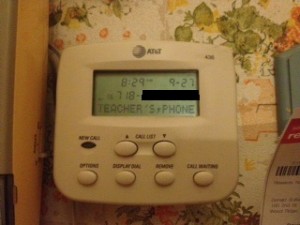
Robocallers Impersonate Teachers On Caller ID, Scare Parents
By 10.4.13
If you were a parent of school-age children and saw “TEACHERS PHONE” come up on your landline caller ID, wouldn’t you pick up the phone? If your kid’s teacher is calling you up, something must be very wrong. When they pick up the phone? A prerecorded sales pitch for “Card Services,” a classic robocall. [More]
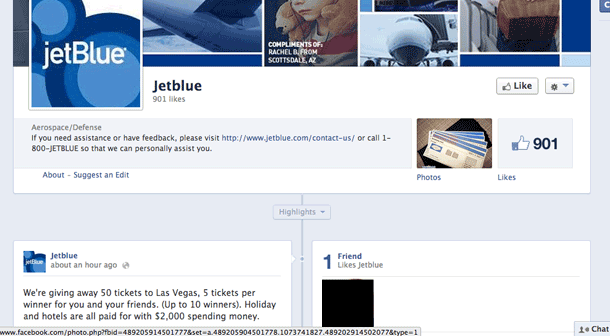
No, JetBlue Is Not Giving Away A Vegas Vacation Via Facebook
By 8.1.13
Lots of companies offer promotions and giveaways through Facebook, so it’s completely plausible that JetBlue might be offering a free vacation if you share and like a photo or “like” their brand page. You should do a little checking before you hit “share,” though. Like making sure that the page you’re sharing really belongs to the brand. [More]

It’s Completely Legal To Spoof Phone Numbers
By 6.21.13
At some point in your life, you’ve probably received a call where the name and/or number that showed up on caller ID was not the actual name/number of the caller. It’s known as spoofing, and many people assume it’s illegal. Those people would be wrong. [More]
By 4.1.08
../..//2008/04/01/heres-how-the-newegg/
Here’s how the Newegg email address was spoofed on the Creative forum over the weekend: Creative has a security protocol in place where you have to verify your email address before you can post. However, after you publish a post you can go back and change your address to anything you like. You won’t be able to verify the spoofed address and therefore won’t be able to post anything new—but anything you already posted will now display the spoofed address. Maybe you can get Daniel_K to fix your forum boards, Creative. (Thanks to Jawaad!)
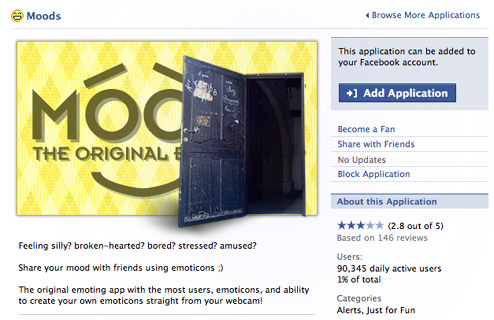
Are You Sure You Want To Add That Facebook App?
By 3.27.08
Gregory writes in to point out that Facebook does a lousy job of monitoring the development of its third-party Platform applications—and in fact many of them are written so badly that they can be easily hacked. The examples he cites, which are listed in the winter issue of the hacker magazine 2600, are all fairly mild stunts like spoofing user IDs, changing the moods of another user, and re-routing gifts, “but this information could be used to mount large scale social engineering attacks if automated and coupled with other information.” To illustrate how easy it is to change another user’s settings, he pointed us to a YouTube example of how to change another users “mood” via the Mood app.

Senate Committee Votes To Ban Caller ID Spoofing
By 6.28.07
The Senate Committee on Commerce, Science, and Technology has voted to outlaw caller ID spoofing. The measure, S. 704, would make it illegal to “to cause any caller identification service to transmit misleading or inaccurate caller identification information.” Companion legislation sailed through the House earlier this month, giving the measure an excellent chance of becoming law. Senator Ted Stevens (R-AK) said the legislation was necessary to prevent false information from clogging up the tubes:

