

Your phone might say “Apple” or “Samsung” or “LG” on the outside, but inside there are parts from dozens of companies, including Qualcomm, which now stands accused by federal regulators of using anticompetitive tactics to maintain an alleged monopoly on one important cell phone component. [More]
royalties
Spotify Hopes $21 Million Settlement Will Make Musicians Stop Suing
By 3.18.16
Spotify is the biggest music streaming service, with a wide selection of artists and types of music. That means it has the widest variety of artists who may become annoyed at its royalty structure, or artists and composers who the service can’t even find. The Sweden-based company settled with one group of publishers, reportedly putting up $21 million to cover unpaid royalties. [More]
11 Million People Are Trying Apple Music, Some Might Actually Pay In September
By 8.6.15
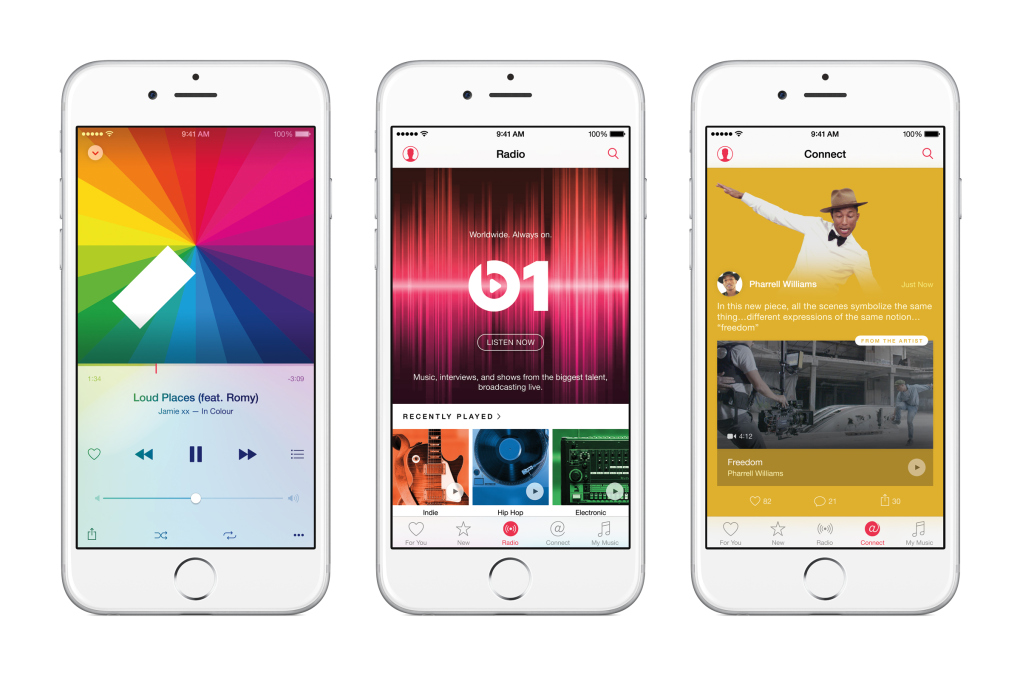
Can Apple’s music-streaming service convert its users into paying customers once the service’s trial period is done? How many people have signed up for Apple Music so far, anyway? The company has finally provided the world with an update on its shiny new streaming service, including actual subscriber numbers. [More]
Amazon Will Reportedly Pay Self-Published E-Book Authors $.006 Per Page Read
By 7.2.15
Last month, Amazon revealed it planned to begin a new payment system that entailed paying some authors per page read instead of per book purchased. Today, we know a little more about those impending payments, including the dollar value that Amazon intends to associate with each turn of the page. [More]
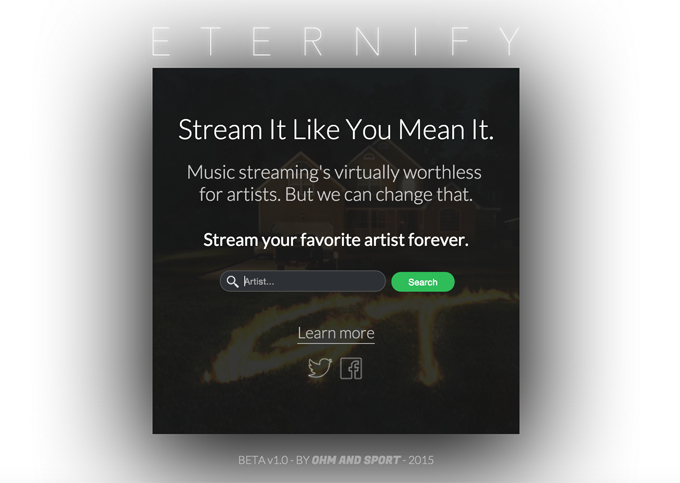
App Loops 30-Second Spotify Snippets To Support Your Favorite Artist
By 6.25.15
Do you want to support your favorite musicians, but do so without spending any money and without actually listening to their songs? A band came up with a brilliant scheme to extract as much royalty cash from Spotify for your favorite musicians in the shortest amount of time. It’s called Eternify, and it renders your favorite songs unlistenable. [More]
Apple Music Changes Its Tune, Will Pay Artists During 3-Month Free Trial
By 6.22.15
Breaking news: It appears that musicians would like to be paid for their work. After Apple announced it’d be giving customers a free three-month trial of its new streaming Music service, artists and others who contribute to making music weren’t too pleased to find out they’d be receiving royalties of 70% of nothing for that time period. The company has now changed its tune, and says it will pay musicians after all. [More]
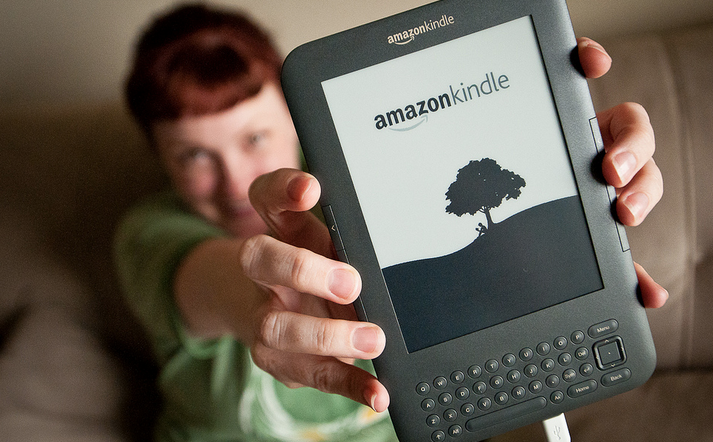
Amazon To Start Paying Some Authors Per Page Read
By 6.22.15
Less than a week after Amazon announced it had reached a deal with the world’s largest book publisher over sales, the company announced it would begin a new payment system for some authors: paying by the page read rather than the book purchased. [More]
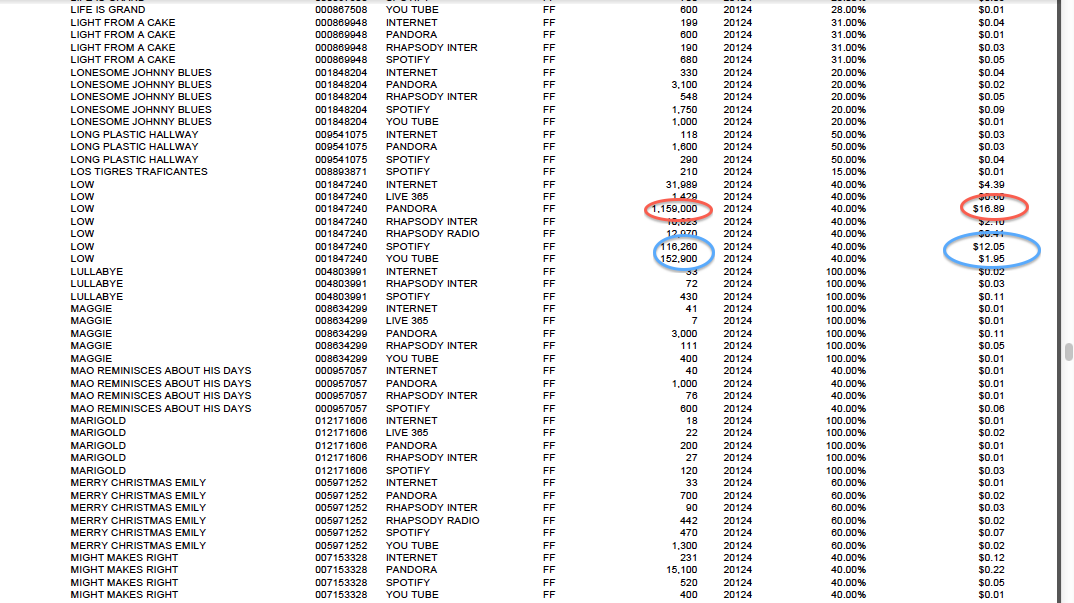
How Much Does A Songwriter Earn When Pandora Plays His Song 1.16 Million Times? Hint: It’s Not Much
By 6.24.13
The music industry has experienced multiple earth-shifting changes in the last 15 years. Widespread Internet use brought us the era of free-for-all sharing with Napster and LimeWire. Then Apple’s iTunes legitimized digital music downloads as a viable distribution model, but also showed that record companies are not always needed to have a hit. Streaming services like Pandora now give users free access to virtually every available song, but at what cost to both the artist and the webcaster? [More]

California Environmental Nonprofit Says State Redesigned License Plate To Cut It Out Of Royalties
By 8.4.11
The California Coastal Commission unveiled a new license plate design featuring a whale’s tale tweaked slightly from the previous design, and an environmental nonprofit said the state did so because the artist who created the previous design asked for royalties to help fund the organization. [More]
Trade Agency Judge Shuts Down Kodak's Patent Claim
By 1.25.11
This digital photography fad isn’t great for companies that built their empires on film, so Kodak seems to be grasping at legal straws to generate some revenue. The company filed a image-previewing patent claim to force smartphone makers such as Apple and BlackBerry maker Research In Motion Limited to pay it royalties. The United States International Trade Commission ruled that the phones don’t violate the patent. [More]

Developers Spiking Homeowner Contracts With Hidden Resale Fee Covenants
By 9.13.10
Last April, Techdirt pointed out that a financial firm in Texas was trying to attach “private transfer fees” to homes, so that developers would get a little bit of each sale as it passed among owners in the years to come. It sounded crazy then–imagine having to pay royalties on clothes or furniture whenever you resold them–but the firm is aggressively expanding its plan and has signed up more than 5,000 developers across the country, reports the New York Times. If you buy a new house in the next decade, look for a “resale fee” covenant hidden in a separate document that might not be included in your closing papers or even require a signature. [More]

Judge Tells ASCAP No Royalties For Ringtones
By 10.16.09
One of the weirder strategies by the American Society of Composers, Authors and Publishers (ASCAP) recently has been to claim that every time a ringtone played, a royalty should be paid. ASCAP sued AT&T earlier this year over the claim, but a federal judge has ruled that your phone ringing does not constitute a public performance.
ASCAP Wants Royalties On Ringtones
By 7.3.09
Not content to let the RIAA get all the recent publicity for stupid lawsuits, ASCAP has sued AT&T over sales of ringtones, saying each time a ringtone plays it’s a public performance and royalties should be paid. Luckily (?) for consumers, ASCAP wants AT&T, not individuals, to pay—although we wonder what they’ll say when you take a track from your own library and make a ringtone out of it.

Pandora, Other Internet Radio Stations May Survive After All
By 10.3.08
Assuming negotiations succeed, you’ll have your Pandora to listen to after all. On Tuesday, Congress passed the Webcaster Settlement Act, which gives Internet radio stations like Pandora until February 2009 to reach a new royalty agreement with copyright holders; if they meet the deadline, the government will not interfere, which is great news since it was the gov’s Copyright Royalty Board (CRB) that set the current market-killing fees in the first place.
Say Goodbye To Pandora?
By 8.21.08
When SoundExchange, the organization that represents many labels and artists, proposed steep new royalty rates for radio webcasters last year, they shortsightedly killed off their own revenue stream. Instead of their proposed rates being cut back as part of a standard negotiation, they were surprised to see the U.S. Copyright Royalty Board reject opposing arguments and adopt SoundExchange’s rates fully. Now Pandora, the popular streaming music site, says it’s paying over 70% of its revenue in royalties, and unless Washington changes the rates soon—which looks unlikely— they will have to shut down.
RIAA 1, NPR 0: Copyright Royalty Board Denies Motion For Rehearing
By 4.18.07
Internet broadcasters suffered a blow Monday when the Copyright Royalty Board judges denied a motion for rehearing sponsored by NPR and other broadcasters. The motion denies a rehearing on the grounds that the parties did not offer sufficient new evidence. They also denied a motion to stay the enforcement of the new royalty rate until the appeal process is complete, claiming that if the rate is eventually overturned it can be refunded.

College Radio Feels The Effects Of The RIAA
By 4.6.07
Internet radio’s low overhead allows for stations to broadcast on a shoestring budget and still access a worldwide audience. For some college stations that only have small transmitters or broadcast in small communities, streaming actually becomes the main source for listeners.
NPR Bites Back: Files Motion Against RIAA Internet Rate Increase
By 3.21.07
Today, on behalf of the public radio system, NPR filed a motion for rehearing with the Copyright Royalty Board in response to its March 2, 2007 decision on rates for streaming internet music. This action is the first step in NPR’s efforts to reverse the decision, and it will be followed by an appeal of the Board’s decision to be filed with the U.S. Court of Appeals for the DC Circuit.
Yeah! They’re bringing the fight! According to Andi Sporkin, Vice President for Communications, NPR: “The Board’s decision to dramatically raise public radio stations’ rates was based on inaccurate assumptions and lack of understanding of the issues. The new rates inexplicably break with the longstanding tradition of recognizing public radio’s non-commercial, non-profit role, while the procedures we’re being asked to now undertake for measurement are non-existent, arbitrary and costly.” Read the filing inside.

