

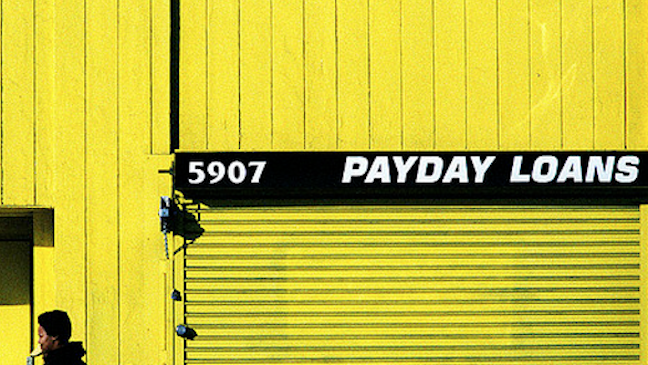
More than a dozen states and the District of Columbia currently prohibit payday lenders and other short-term loan companies from charging exorbitant interest rates on their financial products. Last night, the residents of South Dakota added their state to that list, voting to cap interest rates on short-term loans at 36%. [More]
payday lenders
Subprime Credit Reporting Company To Pay $8M For Illegally Obtaining Consumers’ Credit Info
By 12.3.15
Under the Fair Credit Reporting Act, companies – and lenders – are allowed to access credit reports only for “permissible purposes,” like determining if a person is creditworthy. But federal regulators say a Florida-based subprime credit reporting company illegally obtained tens of thousands of consumers’ credit reports for use in marketing materials for potential clients, including payday lenders.
Online Payday Loans Cost More, Result In More Complaints Than Loans From Sketchy Storefronts
By 10.2.14
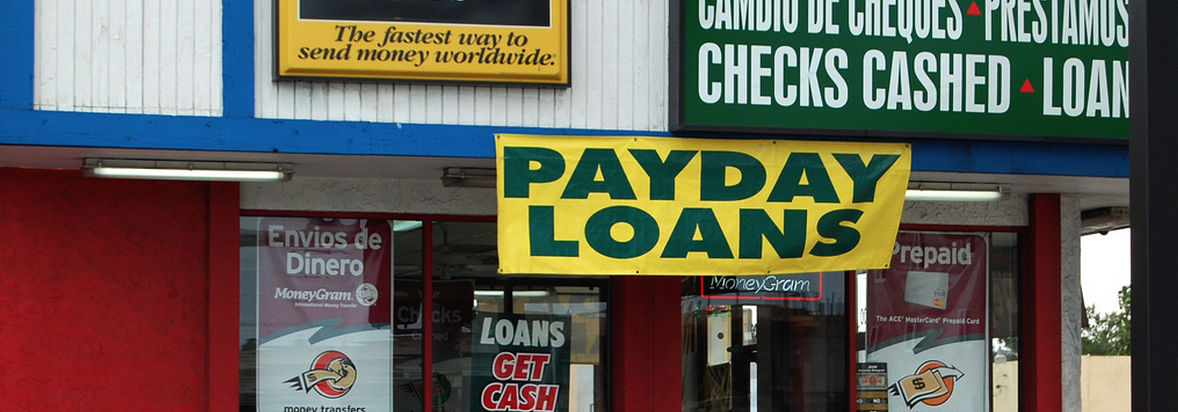
We understand why someone might opt for getting a payday loan online instead of doing it in person. It’s easier, faster, doesn’t require going to a shady-looking storefront operation where some trained fast-talking huckster might try to upsell you unnecessary add-ons or tack on illegal insurance policies. But the truth is that people who get their payday loans online often end up in a worse situation than they would have if they’d applied in person. [More]
How Payday Lenders Fought To Stay Legal In Missouri
By 8.2.13
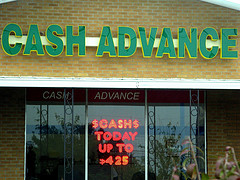
The state of Missouri has about one payday or car-title lender for every 4,100 residents. The interest rate on short-term loans has an average APR of 455% statewide, when the national average is a still-horrific 391%. When a coalition of churches, unions, and community groups tried to cut the maximum interest rate to 36%, the effort failed miserably. Here’s why. [More]

FTC Gets Some PayDay Lenders To Halt Garnishing Wages Without Court Order
By 9.14.11
A group of nine South Dakota-based payday lenders — doing business under at least 17 different names, but all sharing a common senior executive — has agreed to stop garnishing wages from customers with delinquent accounts, at least until there is some sort of conclusion to the Federal Trade Commission lawsuit against them. [More]
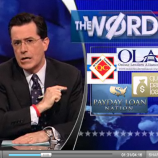
Stephen Colbert Supports Payday Lending, So You Probably Should Too
By 4.17.09
Chicago Democrat Luis Gutierrez introduced a bill last month that supposedly reforms out of control payday lending, where interest rates can exceed 300%, but actually gives payday lenders the freedom to charge annual interest rates that can exceed, um, 300%. It doesn’t sound like much of a reform, and in fact Gutierrez has been heavily funded by the payday lending lobby. But luckily for you and me, Stephen Colbert explains why this is all a good thing.

So What's Replacing Boarded-Up Payday Lenders? Credit Unions!
By 7.27.08
Consumers in Washington D.C. have apparently flocked to credit unions since the district outlawed payday lending last year. Payday lenders whined that lending without 300% APRs was utterly unaffordable, but credit unions are proving that it’s possible to make long-term, low-dollar loans with interest rates as low as 16%.
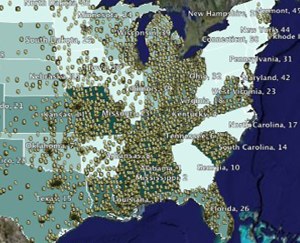
Study Says Payday Lenders More Prevalent In Areas Of High Christian Conservative Power
By 2.15.08
A law professor and associate professor of geography set out to create the most comprehensive map of U.S. payday lenders to date. What they found, to their surprise, was “a surprising relationship between populations of Christian conservatives and the proliferation of payday lenders.” And it’s not a side effect of a poor population that happens to be Christian, according to the authors: “Our research showed that the correlation between payday lenders and the political power of conservative Christians was stronger than the correlation between payday lenders and the proportion of a population living below the poverty line.”

