


Most pay-TV providers don’t like to remind consumers that there is plenty of freely available over-the-air TV, but the folks at Cablevision seem to be taking a “if you can’t beat ’em, give ’em antennae” attitude by acknowledging that some customers are destined to cut the cord (or to never connect that cord in the first place). [More]
nielsen
TV Viewership Down 10%; Industry Blames Streaming Video
By 3.11.15
Even though many of us have hundreds of channels to choose from on cable or satellite, we’re choosing to watch less live TV. But it’s not just because we’ve all decided to go outside and take up steeplechase; it has a little something to do with the availability of subscription streaming services. [More]
Nielsen To Finally Peel Back Curtain On What’s Actually Popular On Netflix, Amazon
By 11.19.14
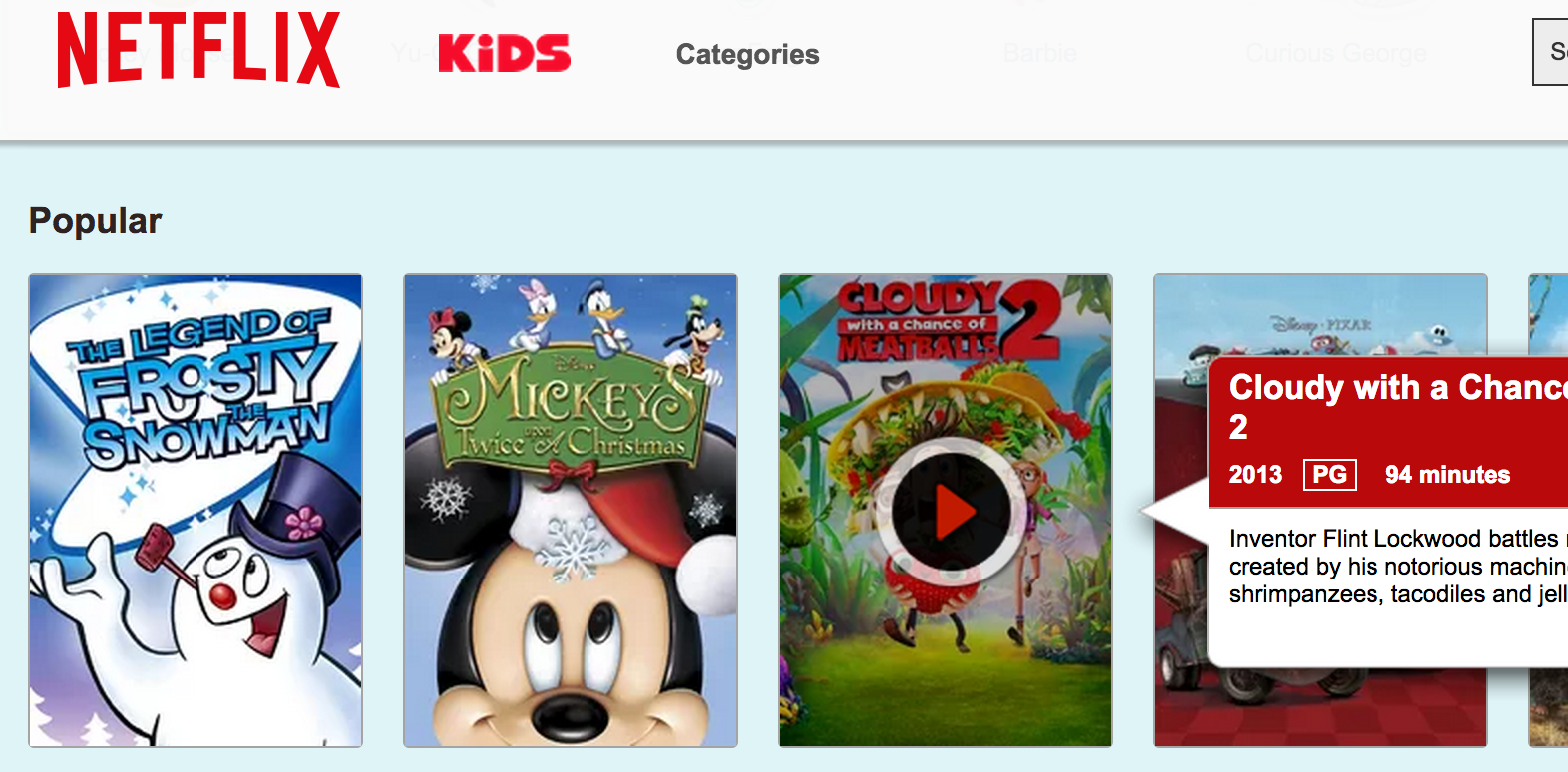
Sure, there’s a “Popular On Netflix” category on the streaming service, but are those actually the most-watched Netflix videos? For years, only Netflix has known how many of its users were watching which videos — and the company has not been eager to share that information. But the folks at Nielsen reportedly are going to start collecting ratings data for Netflix and Amazon videos, pulling back that curtain of secrecy. [More]

Survey: Consumers Willing To Pay More If It Makes Them Feel All Warm And Gooey Inside
By 6.20.14
What do clean water, locally sourced labels and certified organic products have in common? Tough one, right? They are all thing consumer are willing to pay more money for in order to feel as if they’ve made a difference in the world. [More]
Cable Companies Keep Adding Channels, But We’re Not Watching Any More Of Them
By 5.7.14
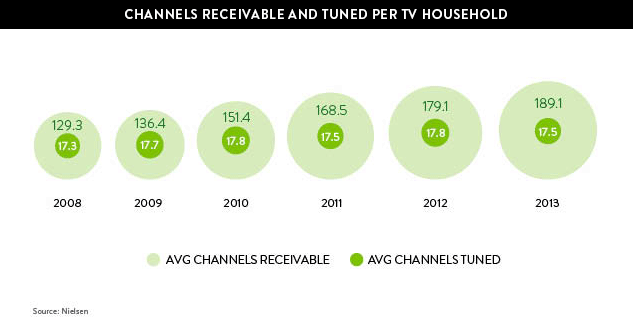
If you’re one of those TV viewers who knows exactly where on their vast channel list to find the few stations you watch regularly, or who frustratedly skims past screen after screen of channels you not only don’t watch but don’t even know the names of, you’re not alone. In fact, a new report confirms that the average TV watcher only looks at fewer than 1-in-10 of the channels that come into their homes. [More]

What Is This “Football” You Speak Of? Survey Says 91% Of Consumers Excited For Super Bowl Ads
By 1.31.13
You’ve got your chicken wings ready, the remote has fresh batteries and the perfect spot is staked out on the couch. Does it even matter that there will be a football game airing during the Super Bowl, or are you just excited to see the ads? A new survey says 91% of consumers gearing up for the big day are also pumped about seeing the commercials. [More]

Nielsen Partners With Facebook, Other Websites To Measure Ad Views Online
By 9.28.10
If you don’t like the concept of having your online actions tracked for marketing purposes, you can add Nielsen to you list of sworn enemies. The audience measurement company is better known for its TV viewer ratings, but yesterday it announced a new partnership with websites like Facebook where it will access user info (age and gender only, it says) to collect aggregate data on ad views around the web. [More]

Quick, Someone Develop Adblock For Online TV Commercials
By 2.8.10
The ratings company Nielsen–the company you can blame for bad stunt-casting and stupid plot devices during sweeps week–is going to start rolling in data from online viewings of commercials this fall, which means networks will start using online viewing stats to help sell ads this time next year. What this means: if a network uses the new Nielsen rating system, “shows seen online will have to have the same group of commercials that run on TV,” reports AdAge. [More]

Who Uses Coupons The Most? Affluent Suburbanites
By 9.3.09
The Nielsen Company—the people responsible for getting good TV shows canceled—just released a survey of coupon users. It turns out affluent consumers (those who make $70k or more annually) use coupons more frequently than the average U.S. household. Those who use coupons the least are from either low-income, one-member, male-only, African-American, or Hispanic households.

People Trust Stuff They Read Online More Than Nearly Any Other Medium
By 7.9.09
A global Nielsen survey reports the cool yet frightening revelation that people trust opinions they find on the internet more than those from newspapers, TV, radio and magazines. The only category that trumps online rumblings is “recommendations from people known.”

Tivo Says E-Trade Commercial Was Most Watched Super Bowl Spot
By 2.6.08
Tivo has announced that E-Trade’s talking, trading, barfing baby was the most watched ad by Tivo subscribers during the Super Bowl, followed by the Pepsi spot where Justin Timberlake got hit in the crotch, followed by the Doritos ad where a giant mouse wailed on a man eating chips. Tivo “sampled 10,000 households using anonymous, second-by-second audience measurement data” to come up with the rankings.

Retailing Consortium Launches PRISM To Collect Data On Shoppers' Behavior
By 11.3.07
A consortium of retailers and consumer suppliers are working with Nielsen Co., famous for its nonsensical television ratings system, to launch a large-scale study of consumer behavior in stores. The program is called PRISM, which stands for “Pioneering Research for an In-Store Metric,” and it uses infrared sensors and manual counting, as well as genetic clones of our loved ones, to monitor not just what we buy but how we go about buying it. “About 70% of final purchase decision are made at the shelf,” says a Procter & Gamble rep. “The store has always been important – we just didn’t know enough about it.”
This Is What A Ghost Looks Like
By 7.26.06
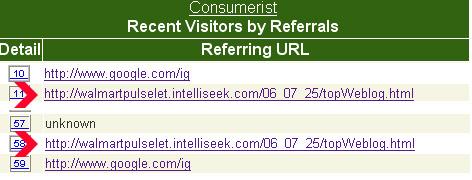
Someone with enough money to shell out for a Nielsen “BuzzMetrics” account is watching The Consumerist for Walmart mentions.

