

Long before Republican lawmakers unveiled their legislative efforts to repeal and replace the Affordable Care Act, supporters of this movement had talked up “health savings accounts” (HSAs) and how crucial they would be to any eventual Obamacare replacement. What these lawmakers and policy makers often skip over is what an HSA actually is, and whether expanding the use of HSAs will really help most Americans. [More]
explainers

What Are Health Savings Accounts & Why Are They A Big Part Of Obamacare Replacement Plan?
By 3.14.17 — Updated: 5.10.17

What The Heck Is 5G Anyway, And Why Does It Matter?
By 7.13.16 — Updated: 2.22.17
Wireless companies like to throw around a lot of swanky-sounding terms to get you interested in their goods. The new hotness on everyone’s lips is 5G, which does not in fact exist yet. But it will, and the FCC today is going to vote on a proposal that will have a lot to do with getting it off the ground. So here’s everything you need to know about the future of your phone. [More]
What Is Zombie Debt, And Why Won’t It Just Stay Dead?
By 6.7.16
John Oliver made a huge splash this week when, to prove a point on his show, he purchased $15 million worth of medical debt for $60,000… and then promptly forgave it all. A lot of that debt was “zombie debt,” which, like its namesake, keeps coming back from the dead to bother people who would much rather be left alone and unbitten. [More]
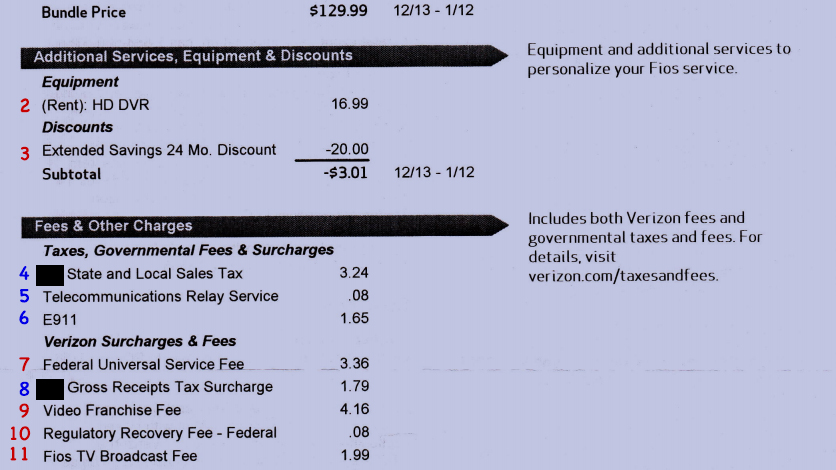
The Consumerist Guide To Understanding Your Verizon FiOS Bill
By 3.22.16
When you sign up for telecom services — some combination of TV, broadband, and/or phone — from your cable company, you’re told you’ll pay something like $49 or $99 a month… and yet the price you actually pay can be as much as 40% or more on top of that, thanks to a heap of sometimes confusing charges and fees. Which ones should you blame the government for, and which are made up by your cable company? One cable company at a time, we’ve been using real customers’ bills to break it down. In previous installations we’ve gone through Comcast, DirecTV, Charter, and TWC; now, it’s Verizon’s turn. [More]
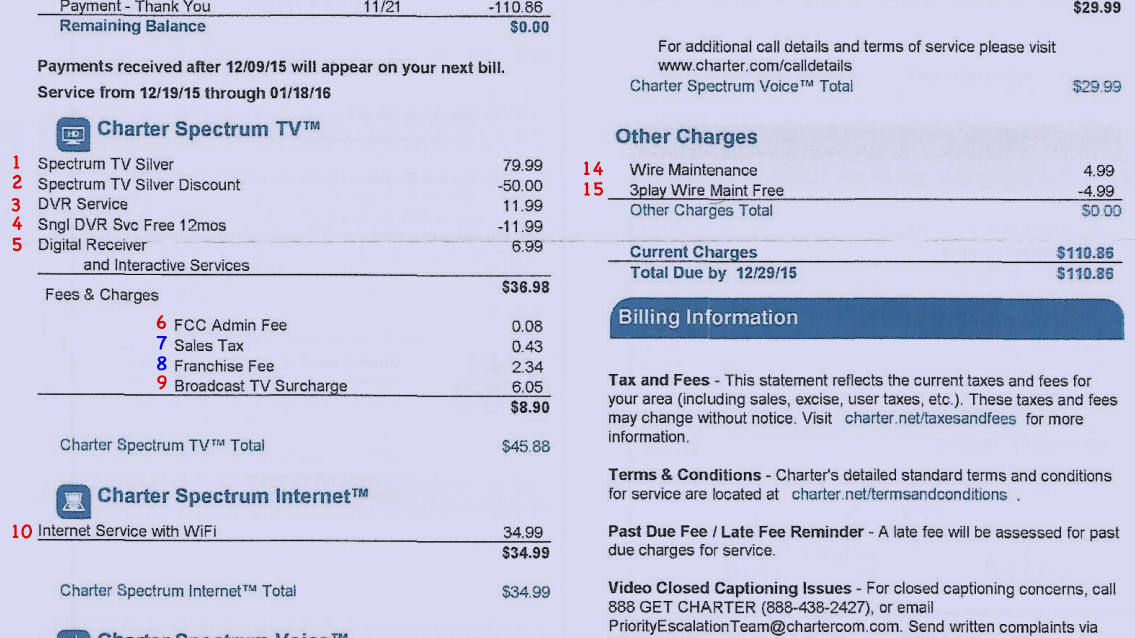
The Consumerist Guide To Understanding Your Charter Cable Bill
By 3.8.16 — Updated: 2.8.17
When you sign up for telecom services — some combination of TV, broadband, and/or phone — from your cable company, you’re told you’ll pay something like $49 or $99 a month… and yet the price you actually pay can be as much as 40% or more on top of that, thanks to a heap of sometimes confusing charges and fees. Which ones do you blame the government for, and which are made up by your cable company? One cable company at a time, we’re using real customers’ bills to break it down. We’ve already looked at Comcast, TWC, and DirecTV, so now it’s Charter’s turn. [More]
The Consumerist Guide To Understanding Your DirecTV Bill
By 2.23.16
When you sign up for telecommunications services — some combination of TV, broadband, and/or phone — you’re told you’ll pay something like $49 or $99 a month… and yet the price you actually pay can be as much as 40% or more on top of that, thanks to a heap of sometimes confusing charges and fees. Which ones do you blame the government for, and which are made up by your cable company? One business at a time, we’re going to use real customers’ bills to break it down. We’ve already looked at Comcast and TWC. This time we’re switching it up a bit to have a look at satellite, and will be dissecting a bill from DirecTV. [More]
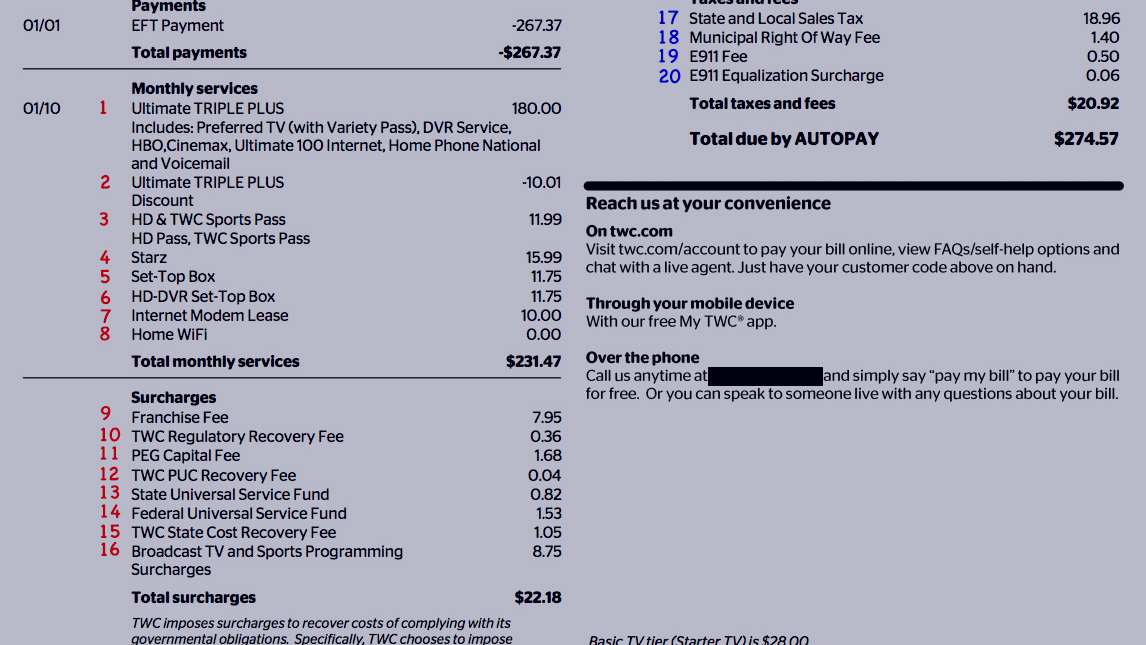
The Consumerist Guide To Understanding Your Time Warner Cable Bill
By 2.17.16
When you sign up for services — some combination of TV, broadband, and/or phone — from your cable company, you’re told you’ll pay something like $49 or $99 a month… and yet the price you actually pay can be 30-40% or more on top of that, thanks to a heap of sometimes confusing charges and fees. Which ones do you blame the government for, and which are made up by your cable company? One cable company at a time, we’re going to use real customers’ bills to break it down. We’ve already looked at Comcast. Up now: Time Warner Cable. [More]
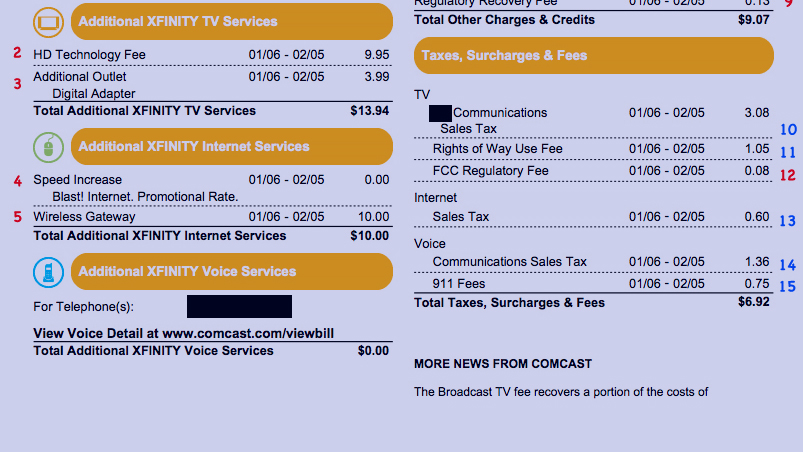
The Consumerist Guide To Understanding Your Comcast Bill
By 2.1.16
When you sign up for services — some combination of TV, broadband, and/or phone — from your cable company, you’re told you’ll pay something like $49 or $89 a month… and yet the price you actually pay can be 30-40% or more on top of that, thanks to a heap of sometimes confusing charges and fees. Which ones do you blame the government for, and which are made up by your cable company? One cable company at a time, we’re going to use real customers’ bills to break it down. First up: Comcast. [More]

NYSE: Four-Hour Blackout Caused By Software Upgrade
By 7.9.15
After a few updates yesterday citing a technical issue as the reason behind an almost four-hour blackout on its trading floor, the New York Stock Exchange is adding new information about the incident, blaming it on a software upgrade. [More]
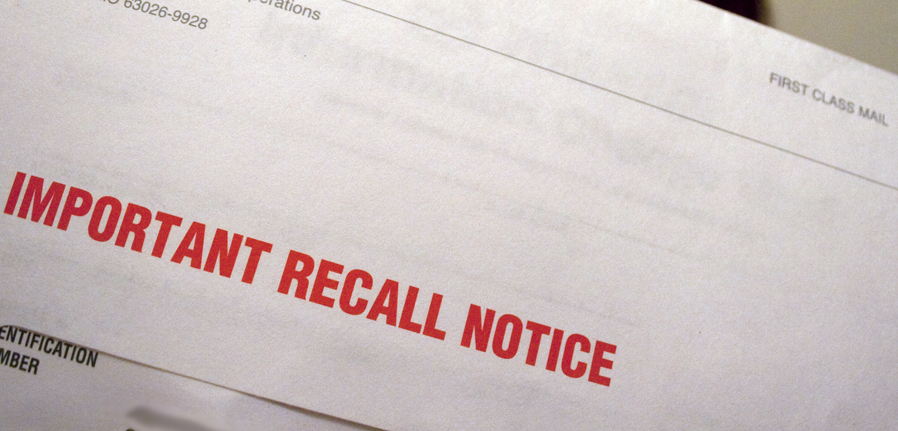
How Recalls Work (And Don’t) And Why They’re All So Different
By 6.8.15
Manufacturers — of all kinds — usually try hard to get it right on the first try. From banana muffins to bicycle helmets, it’s in a company’s best interests to make their products perfect. Not only is it better for their reputation and their business, but it’s less expensive, in the long run, and causes less trouble. Sometimes, though, something just goes wrong. [More]
Understand The Essential Players In The Foreclosure Scandal
By 10.25.10
Having trouble keeping track of all the different players and abbreviations and names in the latest foreclosure fraud mess? ProPublica offers a handy primer. [More]

Why McDonald's Never Rots
By 9.8.10
Pictures of McDonald’s burgers that have been sitting around for years with no visible sign of decay, like the 7-year old one at left, have shocked and delighted the internets, but what’s the science behind the madness? Is it because McDonald’s is a lab experiment that we collectively hallucinate as being actual food? Salon asked the experts to find out. [More]

Can I Make Companies Give Me A Copy Of My Customer Service Call?
By 8.17.10
“This call may be recorded for quality assurance and training purposes.” Yes, but can I get a copy of it? Not unless you made one yourself. [More]

Is It Legal To Eat Your Cat?
By 8.16.10
A man was pulled over last week in Western New York and found to have a live kitty marinating in his trunk. It was sitting in crushed red peppers and chili and salt and he said he intended to cook and eat because it had become “possessive, greedy, and wasteful.” Apparently the guy is new to cat ownership, as this pretty much describes every cat I have (lovingly) owned. Anywhoo, as the recession grows desperate, you yourself may find yourself wondering about the legality of frying up a fluffy four-legged friend. Slate probed case law state by state to find out. [More]

How Do UPC Codes Work?
By 6.28.10
Have you ever wondered what that numbered zebra stripe on the box of every purchase really means? Yes, your fears are true. It does contain secret messages the manufacturer is trying to communicate to the bar code scanner. But we have a secret decoder ring you can use to figure them out using your brain powers. [More]
The Real Reason Behind The $23 Quadrillion Errors
By 7.16.09
The secret of the $23 quadrillion VISA debit errors looks like a specific and not uncommon programming error. Take the insanely large number, if you convert 2314885530818450000 to hexadecimal, you end up with 20 20 20 20 20 20 12 50. In programming, hex20 is a space. Where a binary zero should have been, there were spaces instead. What made this instance special is that it wasn’t caught in time. A Slashdot commenter identifying himself as working in the industry explains more about what very likely happened:

Oh Noes It's The "Shadow" Banking System
By 4.21.09
It doesn’t involve ninjas, but the “shadow” banking system is an important part of the US economy, it’s the companies that loan money but aren’t themselves banks. The loans they make aren’t kept on the companies books, they’re securitized and resold as bonds. White whiteboard and magic marker, Marketplace Senior Editor Paddy Hirsch argues this shadow banking system deserves it own bailout.

