

Last fall, Netflix began allowing users to download some content for offline viewing. While the service was a welcome addition for many, it came with a few restrictions, some of which users are just now experiencing: Some shows and movies can only be downloaded a finite number of times. [More]
downloading
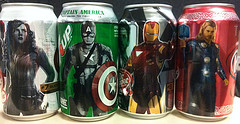
"Thor" And "Kung Fu Panda" Were Popular With Pirates This Year
By 12.30.11
While sailing the seven seas of legally questionable file sharing, freeloaders apparently cast their treasure nets for the likes of Thor, Glee, Kung Fu Panda 2 and Green Lantern. Those titles were reportedly among the most searched-for BitTorrent phrases in 2011. [More]
Studio Dismisses More Than 21,000 Sued For Downloading "Hurt Locker"
By 10.4.11
The studio that produced The Hurt Locker sued 24,583 unnamed people for illegally downloading the film. Now more than 21,000 of those John Does can breathe a little easier because the studio has dismissed them from the suit, leaving more than 2,300 in its sights. [More]
Hurt Locker Lawyers: Time Warner Cable Hearts Pirates
By 6.2.10
If you’re one of the 5,000 “John or Jane Does” accused of illegally downloading copies of The Hurt Locker, and your ISP is Time Warner Cable, you may be safely airlifted out of the battle zone. According to the law firm representing Hurt Locker producer Voltage Pictures, TWC is “a good ISP for copyright infringers” because it won’t hand over the names of its customers as quickly as the lawyers would like. [More]
Hurt Locker Producer Sues "Moron" Downloaders
By 6.1.10
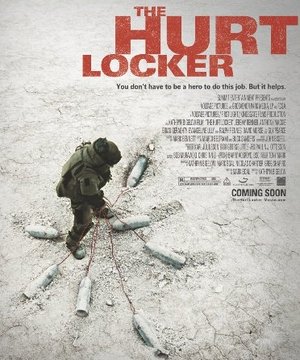
Nicolas Chartier, the movie producer who was banned from the Oscars for sending nastygrams about Avatar, and more recently, told a critic, “you’re a moron who believes stealing is right. I hope your family and your kids end up in jail,” is nothing if not consistent. Chartier has made good on his earlier threat to sue people who downloaded copies of The Hurt Locker, by filing a suit against 5,000 anonymous downloaders in Washington, D.C. [More]
Is It Okay To Download A Pirated Copy Of A Book You Already Own?
By 4.6.10
Yesterday we wrote about someone who downloaded a pirated copy of a game after he couldn’t gain access to the copy he’d already paid for. In that case, which most of our commenters supported, it was clear that the consumer was trying to resolve a problem created by the DRM. But what about if you own a printed copy of a book and you simply want to read the ebook version? Should you have to pay for a second copy? Randy Cohen, who writes the The Ethicist column for the New York Times, says downloading a copy you find online is ethical. [More]
Digital River: Easy To Download From, Impossible To Reach
By 10.23.09
Digital software downloads! Fast. Convenient. But sometimes, it can’t compare with having a physical disc and a printed product key sitting in front of you. That’s what Daniel’s roommate learned when he tried to download Windows 7 from Digital River.
Here's What The New FCC Net Neutrality Rules Mean
By 10.23.09
Yesterday the FCC announced new, expanded rules enforcing net neutrality, and they’ve set aside the next 60 days for public debate. Get ready to hear all sorts of creative end-of-the-world-as-we-know-it arguments from opponents like AT&T. We’ve checked out the official document (pdf) and below we summarize the changes that are open to public discussion for the next two months.
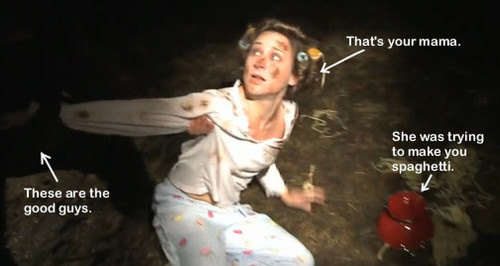
"Don't Copy That 2" Might Scare You Straight, If You Have Never Heard Music Or Seen A Video
By 9.18.09
At first we thought this was a new Black Eyed Peas video, but then we watched from the beginning and realized that it’s actually an attempt to convince you that you should not copy that. Our favorite bit starts at the 2:24 mark, when the little girl’s criminal activity leads to government agents bashing down the door to her house and attacking her poor mama.
By 9.2.09
../..//2009/09/02/heres-an-affordable-non-piratey-way/
Here’s an affordable, non-piratey way to round out your music collection for half (or less) of what you’d pay to Amazon or iTunes. Pitchfok has published their selection of the top 500 tracks of the 2000s. Online music service Lala is offering most of them for 50 cents each for a limited time.
Kodak Gallery Holds Photos Hostage, Then Deletes Them
By 6.2.09
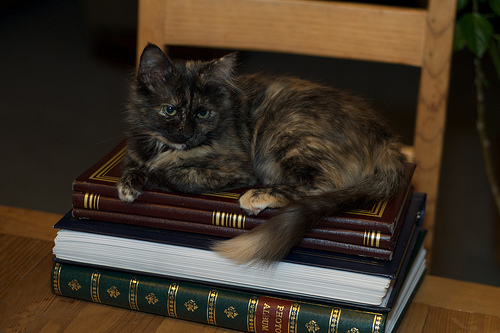
A lot of people out there on the Interwebs apparently didn’t read our article about Kodak Gallery, and their photos were deleted from Gallery starting two weeks ago if they didn’t either pay up or make a photo print purchase. Many customers were fully aware of the deadline, but since Kodak provided no easy way to export full-size photos from the galleries, they were forced to download thousands of files one. at. a. time.

69 Cent Tracks Are Hard To Find On iTunes Music Store
By 4.8.09
MP3newswire.net browsed through not-quite-hits from past decades on the iTunes Music Store to see where these fabled 69 cent music tracks are hiding. He tried the Katydids, Camper Van Beethoven, the Lyres, Rock and Roll Trio, but found nothing below 99 cents. Then he went back to be-bop and blues recordings of the ’40s—nope. Finally, he looked at songs from Ada Jones, a recording artist from 1893 to 1922. Everything was still 99 cents.
iTunes Raises Prices To $1.29 For Popular Music Tracks
By 4.8.09
Say what you will about Apple’s dominion over the music industry, but for a while now they’ve maintained an artificially low market for music tracks by forcing labels to sell songs for 99 cents each. That era is over: in exchange for moving to a higher bitrate and going 100% DRM free (hooray) iTunes has officially introduced “variable pricing” (boo), which means each track may cost 69 cents, 99 cents, or $1.29—it all depends on the song and the label. It looks like Amazon has introduced variable pricing as well, although it’s mostly holding to the 99 cents threshold for now. Amazon’s tracks, by the way, have always been free of DRM.
Cancel Cable Without Losing Your Favorite Shows
By 2.21.09
Cable is one of the first things you should cut to keep expenses down, but that doesn’t mean you should ditch your favorite shows. J.D. over at Get Rich Slowly cut his cable bill from $65.82 to $11.30 without missing a single harrowing plot twist. Here’s how he did it…
Apple: Give Us Money And We'll Remove DRM From Your Music
By 1.7.09
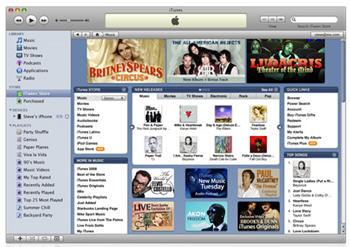
Apple has dropped DRM from iTunes — and is offering to remove their DRM from music you already bought for the low, low fee of $0.30 per song.

RIAA To Stop Suing File Sharers
By 12.19.08
The Wall Street Journal and Ars Technica are reporting that the RIAA has announced a fairly dramatic change in its strategy to fight piracy.
Comcast Officially Informs Customers Of The 250 GB Bandwidth Cap
By 9.18.08
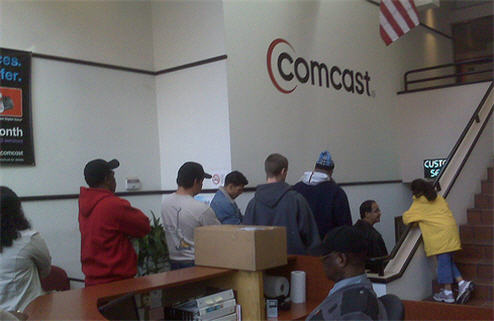
Reader Michael forwarded Comcast’s official warning about the new 250 GB download cap that they’ve added (or rather, that they’ve now admitted to) in their Acceptable Use Policy. The cap has been in place for some time, but Comcast is just now getting around to telling everyone about it.
By 9.2.08
../..//2008/09/02/cnet-has-rounded-up-a/
Cnet has rounded up a list of free bandwidth monitoring apps for Windows and Mac users who will be facing Comcast’s new 250 GB download limit next month. They aren’t perfect, but they “should tide you over until Verizon brings some Fios action to your hood.” [download.com]

