

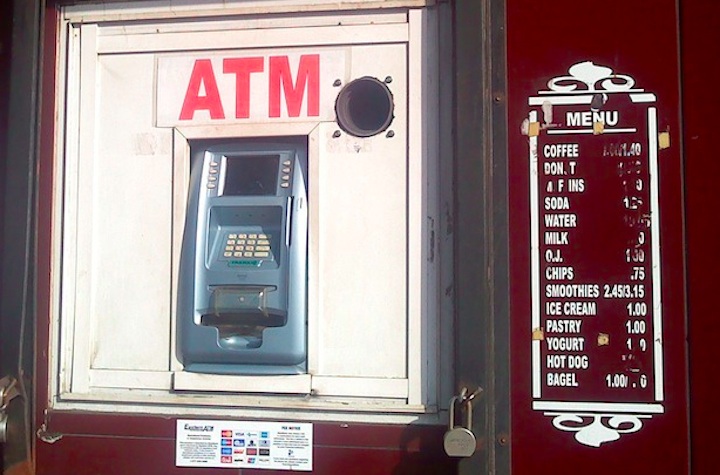
Opening a checking account with a bank is a rite of passage of sorts for many consumers, but the plethora of small-print disclosures, fees and other services are enough to confuse even the most seasoned account holder. While banks attempted to simplify their practices over the years, a new Pew Charitable Trusts report shows that some banks – and regulators – have a long way to go before they’re truly doing everything they can to protect consumers. [More]
binding arbitration

Legislation Would End Forced Arbitration In Student Enrollment Agreements
By 4.30.15
When Education Credit Management Corporation announced late last year that it would buy 56 of for-profit education chain Corinthian College Inc.’s Everest University and WyoTech campuses, consumer advocates expressed great concern that the new company – which would operate under the name Zenith – would continue the unfair practice of requiring students to sign away their right to seek any legal action against the company if they’re wronged. While ECMC ultimately said it would do away with the practice, new legislation aims to strengthen students’ legal rights when it comes to forced arbitration. [More]

4 Reasons You Should Never Resolve Your Dispute On Judge Judy
By 2.26.10
We can understand just a little bit why some people might be willing to go on any of the countless daytime “judge” shows like Judge Judy, Judge Mathis, Street Court, etc. The shows pay you a nominal fee to appear, you get to be on TV and if the defendant loses, the show foots the bill (up to a certain amount). But the following video should give you four very good reasons for why you should never, ever, ever go on one of these shows. [More]
Discover Won't Let Man Opt Out Of Arbitration, Even Though Their Terms Allow It
By 9.3.08
When John signed up for a Discover card a few months ago, he noticed an interesting item in the fine print—he could opt out of binding arbitration if he sent in a written request that contained a few lines of necessary info and his signature. John followed the instructions, but Discover rejected it. Since then they’ve rejected his request a second time, failed to call him back when promised, and transferred him to CSRs who don’t know what the word means. The latest news: now that 30 days have passed, he’s no longer eligible to opt out. John’s thinking about canceling the card.

Mandatory Binding Arbitration Still Sucks
By 6.9.08
BusinessWeek has published a pretty substantial cover story on arbitration, and why it disadvantages consumers. Consumerist readers will be familiar with many of the story’s criticisms: one study finds 99.8% of arbitration cases are decided in the corporation’s favor, some arbitration firms market themselves to companies as a sympathetic and partial judge, the arbitration process is intentionally structured to handicap consumers, and more.
By 5.28.08
../..//2008/05/28/the-supreme-court-rejected/
The Supreme Court rejected T-Mobile’s appeal in 3 cases yesterday, which means an earlier federal ruling that says states “can refuse to enforce arbitration clauses if they include bans on class actions” will stand. Now T-Mobile has to go back to state courts to deal with the class action lawsuits against it. [Associated Press]

Dealership Tells Customer Abitration Is Awesome For Corporations
By 2.12.08
Sean writes: “The wife and I were purchasing a car this weekend. After the typical pulling of teeth to get a price quote over email, we headed into the dealership on Saturday to finalize the deal. We were finally ushered into the finance guy’s office, pitched the warranty, gap insurance, etc., and got to the contract itself. I looked over the agreement and saw the ‘binding arbitration’ clause. Knowing it wasn’t a battle I could win, nor an issue I could avoid by shopping elsewhere, I let it go with a simple, “I don’t like the binding arbitration clause.” To my surprise, he responded, “Arbitration is the best thing invented for corporations!” [More]

Court Allows Lawsuit Against T-Mobile To Proceed
By 10.11.07
On Wednesday, the California Supreme Court refused to review two earlier findings, which killed T-Mobile’s final chance at blocking a lawsuit against its early-termination fees and practice of locking phones. This is the third time T-Mobile has tried to stop the case from proceeding, and both a state trial judge and a state appeals court have already rejected T-Mobile’s claims that its customers were required by the terms of their contracts to submit to binding arbitration.

MBNA Refuses To Appear For Binding Arbitration, May Still Prevail
By 8.11.07
Elizabeth Warren, the doyenne of consumer debt, received a frank email from a lawyer that shows the anti-consumer bias of binding arbitration. The lawyer was attempting to arbitrate a dispute with MBNA, a difficult task complicated by the bank’s refusal to participate.

What Is Mandatory Binding Arbitration?
By 4.11.07
Chances are, you own a product or subscribe to a service you agreed to “binding arbitration” once you purchased it. But what is it?

