

Three years ago, after a building collapse in Bangladesh killed 1,100 of the people who were making our clothes, major global retailers pledged to make sure that the people who work for their suppliers are paid a living wage and have safe workplaces. A new report shows that while some things have improved at factories that supply retailers like Walmart and H&M, there are still serious labor and safety issues in these companies’ supply chains. [More]
bangladesh
Report: Only Some Progress In Making Sure Clothing Factory Workers Are Treated Like Humans
By 6.1.16
H&M Plans To Pay Textile Workers “Fair Living Wage” By 2018
By 11.25.13
Amidst growing public concern over potential exploitation of overseas garment factory workers, the world’s second-largest clothing retailer, Sweden-based H&M, has announced what it believes is a roadmap toward paying a “fair living wage” by 2018 to approximately 850,000 of the textile workers who make its products. [More]
Walmart: 32 Factories In Bangladesh Failed Initial Safety Inspections, Most Fixed Problems
By 11.18.13
In the aftermath of the factory collapse that killed more than 1,100 and a fire in November killed 112 people, retailers pledged to ramp up safety efforts with any factories that produce clothing for stores here in the U.S. As part of that increased attention to keeping the workers who make your clothing safe while they try to earn a living, Walmart says it identified safety problems at 32 Bangladesh factories it does business with. [More]
The Workers In Bangladesh Who Make Your Clothes Are Rioting
By 9.27.13
If you’re going to perform hard work for long hours, at least you should receive a reasonable wage during a time of high inflation in your country. Right? That’s not generally the case in Bangladesh, where as many as 100,000 workers have taken to the streets to demand a minimum wage of $104 per month, up from the current minimum of $39. [More]
JCPenney To Require Structural Inspections Of Factories In Bangladesh
By 5.17.13
Retailers and manufacturers continue to react to last month’s tragedy at the Rana Plaza factory outside of Dhaka, Bangladesh, that resulted in the deaths of more than 1,100 people. Days after Walmart announced its own program to review and inspect manufacturing facilities in the region, JCPenney has outlined its plans to audit factories. [More]
Walmart Creates Its Own Bangladesh Factory Safety Program
By 5.15.13
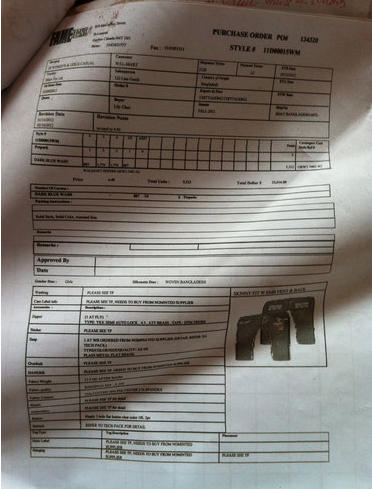
While major European retailers have moved to sign a legally binding accord aimed at improving working conditions and factory safety in Bangladesh, the large American retailers have yet to join. Now, amid reports that some of its products had been made at the Rana Plaza facility that collapsed in April, taking the lives of more than 1,100 people, Walmart is creating its own program to inspect these facilities. [More]
Parent Co. Of Calvin Klein, Tommy Hilfiger Is First U.S. Apparel Maker To Join Bangladesh Factory Safety Accord
By 5.13.13
Weeks after a garment factory outside of Dhaka, Bangladesh, collapse, injuring thousands and taking the lives of more than 1,100, a number of large, global apparel and retail companies have signed on to an accord aimed at improving conditions for garment workers in the area and preventing future tragedies. [More]
Are We Just Outsourcing Our Triangle Shirtwaist Factory Tragedies?
By 4.4.11
When we noted the 100th anniversary of the Triangle Shirtwaist Factory fire on March 25, you might have looked at that and thought, phew, good thing stuff like that isn’t happening anymore. But in developing countries around the world with little to no worker rights and sweatshops paying pennies a day, it is. Like in Bangladesh in December 2010 when 29 workers died after a fire swept through the Hameem garment factory. The workers were trapped inside because guards had been ordered to lock the gates in the event of a fire in order to prevent clothes from being stolen during the confusion. The factory made clothes for GAP. [More]

