(smcgee)
Facebook stock has reached a new low following news that analysts at Bank of America/Merrill Lynch and Bank of Montreal have lowered their price target for the stock.
“Revenue pressure from growing mobile usage, a larger-than-expected social gaming revenue slowdown, higher spending and lock-up expiration are overhangs that, in our view, will continue to impact the stock in 2012,” said Bank of America-Merrill Lynch analysts.
“We remain constructive on FB’s opportunity to drive an acceleration in revenue growth from new ad formats,” one of the BOA analysts wrote. “We see the success of new ad formats as paramount for the stock.”
Meanwhile, elsewhere on the Internet, Henry Blodget of Business Insider compiled a detailed list of information he claims could have been gleaned by anyone who took the time to read Facebook’s IPO Prospectus or Mark Zuckerberg’s Letter to shareholders.
A sampling:
Facebook’s growth rate was decelerating rapidly.
Facebook’s user-base was rapidly transitioning to mobile devices, which produce much less revenue.
Facebook’s operating profit margin was already an astounding 50%, which suggested it had nowhere to go but down.
Facebook’s CEO had a nearly unprecedented amount of control over the company.
Facebook’s CEO had set up this astounding level of control intentionally. Mark Zuckerberg knew all about how impatient public-market shareholders are. And he set up the whole company so he would never have to pay attention to their whining.


[rubs thumb and forefinger together as if playing "My Heart Bleeds For You" on the world's tiniest violin]
I almost blew my coffee out my nose just as I finished your sentence it was so funny.
[Rubs both thumbs and both forefingers together as if playing "My Heart Bleeds For You" on two of the world's tiniest violins because we all know it sounds better in stereo!]
I love to run with someone’s joke.
Plays Pink Floyd’s “Money” on the bagpipes
I so want to hear this.
[plays Handel's "Messiah" on the kazoo]
I’d rather hear Pink Floyd on the bagpipes. I know the drum major of the local pipe and drum corps, so maybe he can arrange it.
Or perhaps Rush’s “YYZ” played on sousaphone.
My former band director and a couple of his cohorts went around the county one year performing Christmas carols — on sousaphone.
Well, I’m trying to be realistic. I can’t play bagpipes, or a sousaphone. But I could probably manage a kazoo.
I wasn’t specifically requesting that YOU perform it.
I am so glad I didn’t put money down when that stock came out.
I only regret not setting up a margin account in time for the IPO.. I so wanted to short-sell the stock on the opening day.
I regret not short selling this stock.
The average investor could only short sell after a certain date (May 23rd I believe) and by that time it had already tanked enough that I wouldn’t be willing to short it at that price and then have to buy to cover at a higher price caused by some unknown good news.
August 22 puts were fine on the first day of options. Currently watching my Nov 17 and Dec 16 puts jump. Thats how I “invested” in facebook. I Like!
I’m assuming that Starfury wanted to take a short position
in Facebook that wouldn’t expire like options do.
I’ve never tried using puts. However, I don’t have much experience shorting either.
From a risk management point of view, it may be superior. At least with a put, you don’t have to pay to borrow the stock, don’t have to pay substitute dividends, and your loss is limited.
(Interestingly, I’m more tempted to sell naked puts as a way to acquire stock versus buying one for hedging or speculation.)
I was very motivated to short his stock, but by the time there were shares available to borrow, it had tanked a fair bit. I’d been waiting for the IPO so that Facebook could earn the honour of being my first short.
Then for some reason, the stock spiked for no apparent reason about 7% the afternoon of May 31st. Figuring this had to be anomalous, I shorted right before the close. The next morning – it opened down 5%, so I bought to cover. In hindsight, I should have held the position open, but shorting does expose a person to unlimited risk. (Granted, even at $29-30 per share, it’s a fair bet that is grossly overvalued.)
Easiest money ever made
.
I regret urging my partner to buy it! It’s hard not to wince every time I look at it, which at this point is not often. I am just basically writing it off as lost money at this point. =-(
“Facebook’s CEO had set up this astounding level of control intentionally. Mark Zuckerberg knew all about how impatient public-market shareholders are. And he set up the whole company so he would never have to pay attention to their whining.”
This? This right here? This should be every company ever.
Unless you are a share holder…
I made that mistake just once, with Charter Communications, I figured Paul Allen had to be able to take it through the roof….
my bad,
Trusting in one human not responsible to me is not a recipe for success. :/
Except that owning a share of the company is nothing without “whining rights.” If the value of a share of stock is based on the amount of influence it gives you within a corporation, and the corporation is set up to minimize that influence, guess what happens to the value of the share.
I was talking more about the impatience part of it, but sure. Still, investors are too worried about their quarterly profits and not looking far enough into the future.
Except that a shareholder cares nothing about a company expect for how much money they are making off of it. They don’t care if they’re developing new technologies unless it puts money into their pockets. And if the company posts record profits one year they’re expected to do it over and over again as if there’s no ceiling. In other words, shareholders aren’t rational.
Yup. That’s the flaw of the Street. It’s a failure. It’s just not worth it.
Amen Shadowfire. Amen.
I have a feeling Zuckerberg’s a little like “Crazy Eddie” Antar.
So a company that doesn’t physically manufacture anything and whose
success is dependent upon the whims of pimply faced teenagers is doing bad?
Who woulda thunk?
Anyone that watched individual’s privacy destroyed by that company. Acceptances by colleges revoked due to crap placed on faceplant. Doesn’t that tell a lot. I dont need a bunch of so called “friends” watching every move I make. Security, Security, Security! Not so with fb. I think the symbol should have been DM (data-minining).
‘I think the symbol should have been DM (data-minining).’
If it is a for-profit company and you don’t pay for an account, you are not the customer. You are the product.
I had everyone on Facebook that I knew, then I gradually started weeding out the psychos, imbeciles and vapid party animals/preps and racists. Almost everyone that is my “friend” is someone that I’m cool with. The social networking thing is a fad.
That depends on your definition of bad.
It made Zuckerburg a billionaire.
Shareholders… not so much.
I work at a financial planning firm, and we had clients calling in asking if they should buy some Facebook IPO. We were all “Duh. No. That would be stupid.” And now look.
Funny thing is, clients never seem to remember when we save them from themselves. :
A friend of mine was going on a rant about how fund and pension managers have been short-changing us all on buying up FB shares.
Fortunately, it appears to have a very low Institutional Ownership percentage, so thankfully most finance professionals are passing on it – at least until it can develop a proven track-record. At least *some* are living up to their fiduciary responsibilities for their clients.
Everyone in the business knew not to buy just based on the prospectus. The people that got burned are the ones who bought “because I like Facebook!” or “It’s a hot company, they’ll be worth a bunch!!”
Anyone who did their research knew it would tank, and tank hard, taking the money of people who buy with their hearts and not their brains, with it.
There were lots of folks hoping this was the next Google and were hoping to make obscene amounts of money in an incredibly short time-frame.
Warren Buffet is attributed as saying “Be fearful when others are greedy.”
As much as I hate to admit it, I agree completely with Zuckerberg with regards to “whiny” short-term investors. He is correct in his assertion that too many companies have been and are being destroyed by the relentless obsession with short-term profit, rather than long-term goals.
Sears is a prime example of this; they have literally destroyed their reputation as a premium retailer. Because of shareholder pressure and gross mismanagement, they’ve forgotten about what customer service truly means (and how it looks) in favour of ever higher quarterly returns. It has cost them dearly with the closure of many of their stores.
Best Buy, are you paying attention????
Spot on luxosaucer13. Spot on.
This applies to nearly every publicly owned retailer you can think of. And really to privately owned retailers, too, it’s just a different group of people you have to appease.
But it’s not fair to entirely blame the shareholders. A lot of CEOs do what they can to boost short-term profits to look good and get a better compensation package elsewhere, all the while destroying whatever culture it was that made the company successful to begin with.
Also, there are investment firms that specialize in this. They buy up a company, cut everything to the bone to maximize short-term profit, then sell it at a profit. This ends up hurting everybody else — the employees who were laid off, the demoralized employees who remain, the customers who lose what they loved about the company, and the new owners, who end up with a gutted shell of what they thought they were buying. I once worked for a company that went through this — it no longer exists, not even through a merger with another company.
I look at it this way: Private companies’ major concern is the satisfaction of their customers. Their customers are the ones who buy their product or service and, to a lesser degree, their employees. As long as the company is balancing their efforts in that regard, they will be successful. The business will grow because of positive word-of-mouth and the relative satisfaction of their employees. Happy customers tend to recommend a business to a friend or colleague; happy employees tend to provide better customer service which, in turn, fuels happy customers.
By going public, a company throws another variable in the mix: The shareholder. The shareholder, on average, is after only one thing….a return on their investment. Honestly, they couldn’t give a rat’s ass about customer or employee satisfaction, because, in their short-term thinking process, it’s irrelevant to their goal: maxmising the value of their investment. By my definition of success, if a business is successful, they’re either a privately-owned company and want to stay that way because of the customer and employee experience, or they’ve learned to balance the needs of ALL people involved: the customer, employee and shareholder.
My father owns a small business and is quite successful at it; he could quite possibly me more profitable if he went public, but he feels that he would lose the thing that is most important to him and the thing HE can control directly: the satisfaction of his customers, both external and internal. By remaining private, he doesn’t have to answer to anyone but his customers, and he controls the direction of the company. IMHO he will continue to be successful. IOW, he believes that if he takes care of his customers, his customers will take care of him.
Novel concept, isn’t it?
Addendum:
2 Prime examples of public companies destroying themselves by paying more attention to the bottom line (shareholder pressure) than customer service and quality: Sears and Dell.
K-Mart bought Sears not too long ago and started running Sears stores like K-Marts: no investment in their infrastructure or equipment, cutting back on product quality and cutting back on employees and customer service. Sears built their original business on quality and customer service. Sears customers were arguably different than K-Mart ones; they expected a better level of service, but Sears Holdings (the combined Sears/K-Mart company) failed to realise this. Look at them now: A mere shell of what they used to be, and they’ve closed many of their retail Sears stores.
The second example is Dell. Around the turn of the millenium, Dell had a stellar reputation for quality and service. Then a fellow named Mort Topfer left the company. Mort knew what quality and service meant to the company. Michael Dell, in Mort’s absence, hired a bunch of “green” MBAs who knew nothing about customer service or product quality and both started slipping badly. Dell stepped down as CEO in mid-2004 and his replacement, Kevin Rollins, further accelerated the “cheapening” of Dell, all in the name of ever increasing profits at the expense of all else. Dell finally had to take over again in January 2007 to try to stop the bleeding. The result: when Mort Topher was with Dell, Dell was the #2 PC company worldwide, now they’re at #5. Quite a fall from grace. Dell once had ALL support based in the US and they built ALL their products in their own production facilities; now only their business support is still based in the US and most of their products are made by cheaper Asian sub-contractors, just like everyone else. Dell lost their competitive edge, all in the name of profit, and their products don’t have the reputation or quality they had at the turn of the millenium.
I’ll say it once more: Zuckerberg is right. He wants quality above all else and history shows you most likely can’t have quality if shareholder pressure pushes you towards ever increasing profit, at the expense of everything else.
When your company follows the model of a company that has been through bankruptcy twice in the past decade (KMart), you’re screwed. The surprise is that they’re still around at all.
And buying another huge company as you’re emerging from bankruptcy might not be a great strategy, either. It reminds me of the 98-pound weakling going on to the middle of the beach and flexing his non-existent muscles in front of everyone so they will think he’s Charles Atlas. He ain’t foolin’ nobody.
Often floundering companies buy out smaller ones with large stockpiles of cash and little debt.
It’s kind of like an emaciated predator pouncing on a fat bit of prey.
I don’t have numbers, but I can’t believe Sears was smaller than KMart, not by much anyway.
My young sons are an effective social networking stock market index:
Friendster: Never heard of it.
MySpace: Abandoned – Tried to delete his account to no avail.
Facebook: Boring – His mother, grandmother and aunts love it.
LinkedIn: That’s for you, “old man.”
Google+: Free e-mail plus what?
Pinterest: Hen party.
Instagram: Cool way to share pics – Unable to convince me to take a picture of me and my cat to post.
Foursquare: What the hell is that?
Tumblr: Geeks/Nerds.
Twitter: That’s where it’s at (for now
iPhone: Eagerly awaiting the iPhone 5 because all of his friends are getting one too. (Oh yeah, they all think Siri sucks and use it as a joke.)
As for any profits to be realized from “targeted marketing,” they don’t pay any attention to it and will never, ever consider paying for membership.
Facebook = Fail ?
Discuss.
A more reasonable market cap, based on their business model, actual revenues, etc. was about $9-10 per share at launch. Which was suggested by at least a couple analysts. But everyone was just hoping the hype would be enough!
But then how would Suckerberg have become a 20 billionaire rather than a 4-5 billionaire?
We’ll find out in November when the Zuck’s lockouts expire. 1.2 Billion shares!
Huzzah!!! Over a billion more shares to potentially flood
the market and rais… err, I mean to lower the stock price.
So glad I’m shorting. $$$$$
What price did you short it at and what is your buy to cover price?
Within the first 10 minutes options were available, FB was at 33. I bought the Aug 22 puts due to the lockouts with the intention of getting more out of the money puts when they expired. Got sidetracked with BBY puts just before earnings release alllowing me to get a lot more fb puts than I originally expected. I did like this latest drop, just earlier than expected. Now we await September’s lockout, then October’s, huge November lockout and then again in December. Believe final lockout is in May. And the “analyst’s” target price was lower to 23. Think they got the decimal point wrong.
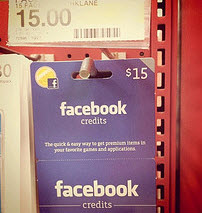
FB saw its price target slashed to $15 from $25 by BMO Capital on Friday morning.
REMEMBER! Every short seller is a future buyer! (or a litigant in a bankruptcy case, or maybe a planned bankruptcy beneficiary, ….)
Facebook’s problem is they should have IPO’ed years ago… Today practically every non Luddite in the WORLD with Internet access is already on Facebook, and those users increasingly interact with Facebook in shorter bursts via their smartphones. FB hasn’t figured out how to monetize location info gleaned from user phones, and hasn’t figured out how to advertise effectively, given the limited screen size and vastly different usage model of said phones…
I’m not surprised. But don’t worry, the crimin….errrr…I mean…the bank execs will still find a way to make plenty of $$ off of it all.
I don’t know about the bank execs but I already made plenty of money off of it. The stock was down to like $20 a while ago then rebounded to about $35 glad I am out of it now but it still made me some decent bank.
I made money off of the facebook IPO on opening day. Not a lot of $$$ but I did come out ahead (about $65 after expenses).
I baby-sat it that morning, and once it started to drop again, dumped it like a hot potato. Good thing, too, since it has not even come close to what I sold it for since then!
I have no problem with the founder having a lot of control over the company, so Wall Street can’t destroy it and treat employees like slaves. I don’t like Mark Zuckerberg, because he’s just a weird, creepy guy that does a lot of things that hurt Facebook. However, he is the lesser of two evils. I just don’t like the way Wall Street operates. It’s disgusting. They’re scum.
“a weird, creepy guy that does a lot of things that hurt Facebook.”
How many Facebook users does that describe?
In fact, if you change “hurt Facebook” to “hurt the Internet,” you’ve described half (at least) of the people who use the Internet.
That’s what Bain Capital did buy the company strip it send jobs oversea’s sell for profit hide money repeat process and now he’s Running for President, No way in hell that pod person will get my vote,